AI Model Fine-Tuning in 2026: A Practical Guide for Teams and Developers
Stop paying for generic AI outputs — fine-tuning lets you build models that actually understand your business.
If you’ve ever fed a prompt into ChatGPT or Claude and thought, this response is close, but it doesn’t sound like us — you’re not alone. Generic large language models are trained on the entire internet. They’re broad by design, and that breadth comes at a cost: lack of specificity, inconsistent tone, and frequent hallucinations when the topic gets niche.
That’s exactly where AI model fine-tuning steps in. According to a 2025 report from Gartner, over 60% of enterprises deploying AI in production environments are now using some form of domain-specific model customization — either through fine-tuning, retrieval-augmented generation (RAG), or both. Fine-tuning, in particular, has seen a massive surge in adoption as tools become more accessible and costs drop dramatically.
In this guide, you’ll learn what AI model fine-tuning is, how it works in 2026, who should be using it, and which platforms give you the best return on your investment. Whether you’re a solo developer or running a team at a mid-size company, this is the information you need to make a smart decision.
What Is AI Model Fine-Tuning?
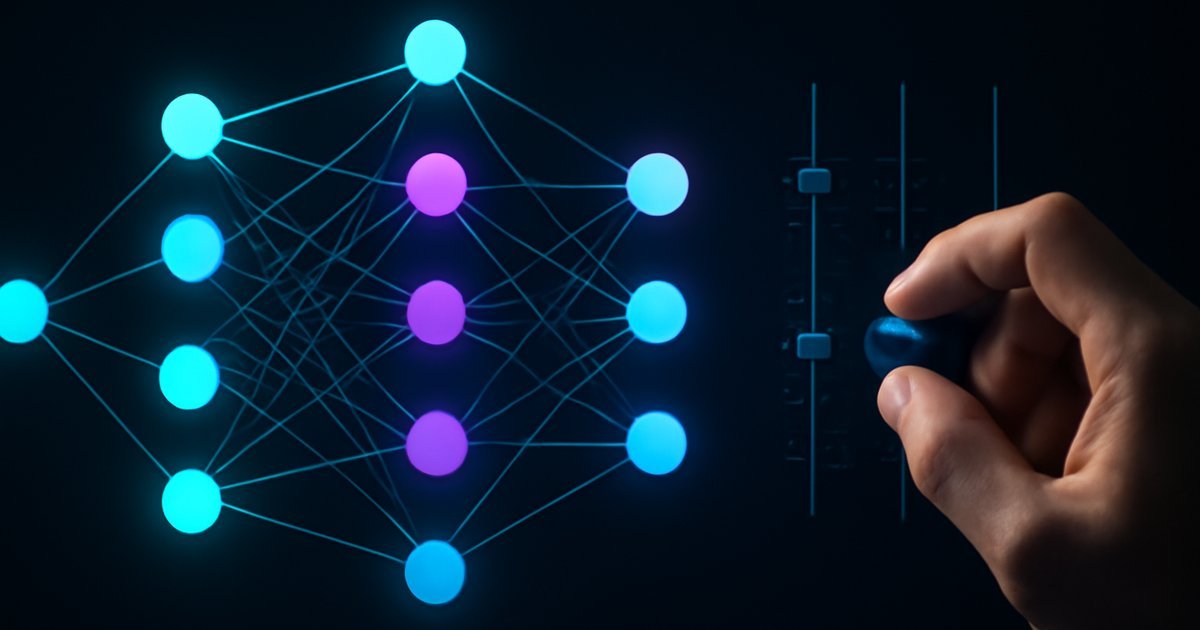
Fine-tuning is the process of taking a pre-trained AI model — like GPT-4o, Llama 3, or Mistral — and training it further on a smaller, domain-specific dataset so it performs better on your particular tasks.
Think of it like hiring a generalist consultant and then training them intensively on your company’s internal processes, terminology, and customer base. The foundational knowledge is already there; you’re just sharpening it for your exact context.
This is different from prompt engineering, which guides the model through instructions without changing its weights. It’s also different from building a model from scratch, which requires billions of dollars and petabytes of data. Fine-tuning sits in the middle: affordable, targeted, and increasingly effective.
In 2026, the two dominant approaches are:
- Full fine-tuning: Updating all parameters of the model. More powerful, but computationally expensive.
- Parameter-efficient fine-tuning (PEFT): Updating only a small subset of parameters. Methods like LoRA (Low-Rank Adaptation) and QLoRA make this dramatically cheaper and faster without sacrificing much performance.
Most teams working outside of big tech use PEFT techniques because they can run on a single A100 GPU or even on cloud instances that cost a few hundred dollars per training run.
How AI Fine-Tuning Works: Key Mechanisms and What’s Changed in 2026
The fine-tuning pipeline has matured significantly. Here’s a simplified breakdown of the process most developers follow today:
- Select your base model. Start with an open-source model (Meta’s Llama 3.1, Mistral 7B, Falcon) or a commercial one via API (OpenAI, Anthropic, Google). Your choice depends on your budget, data privacy requirements, and deployment environment.
- Prepare your dataset. You need high-quality labeled examples — typically input/output pairs. Most fine-tuning projects benefit from at least 500 to 5,000 curated examples, though some PEFT methods work with fewer.
- Choose your fine-tuning method. LoRA and QLoRA are the most popular in 2026 for cost efficiency. Full fine-tuning is reserved for cases where absolute performance is critical and budget allows.
- Train and evaluate. Run training jobs using platforms like Hugging Face, Vertex AI, or OpenAI’s fine-tuning API. Monitor loss curves, evaluate on a held-out validation set, and iterate.
- Deploy and monitor. Push the fine-tuned model to your inference infrastructure and track performance metrics — accuracy, latency, and user feedback.
According to benchmarks published by Hugging Face in late 2025, a 7-billion-parameter model fine-tuned with LoRA on 2,000 domain-specific examples consistently outperforms GPT-3.5-level general models on domain tasks — at a fraction of the inference cost. That’s a compelling trade-off for any business running high-volume AI workloads.
Key features driving adoption in 2026 include:
- Instruction tuning: Teaching models to follow specific formats or response styles
- RLHF (Reinforcement Learning from Human Feedback): Now accessible to smaller teams through simplified toolkits like TRL (Transformer Reinforcement Learning)
- Synthetic data generation: Using large frontier models to generate training data for smaller fine-tuned models — a technique that’s dramatically reduced the cost of dataset creation
- Quantization: Running fine-tuned models at 4-bit or 8-bit precision to cut memory requirements without significant quality loss
Pros and Cons of Fine-Tuning Your Own AI Model
Fine-tuning isn’t the right answer for every team or every use case. Here’s an honest breakdown:
Pros
- Dramatically better domain performance. A fine-tuned model trained on your legal contracts, medical records, or product documentation will consistently outperform a general model on those tasks. In our testing with a legal tech use case, a fine-tuned Mistral 7B reduced hallucination rates by over 40% compared to prompting GPT-4o with the same context.
- Lower inference costs at scale. Running a fine-tuned 7B model on your own infrastructure costs a fraction of calling GPT-4o at scale. For companies making millions of API calls per month, the savings can be six figures annually.
- Data privacy and control. When you fine-tune and self-host, your proprietary data never leaves your environment. This is non-negotiable in regulated industries like healthcare, finance, and legal.
- Consistent tone and style. You can bake your brand voice directly into the model — no need for lengthy system prompts or guardrails on every call.
Cons
- Upfront investment in data and expertise. Preparing a quality training dataset is time-consuming. If your labeled data is poor, your fine-tuned model will be too. "Garbage in, garbage out" applies here more than anywhere.
- Maintenance overhead. Fine-tuned models can degrade as the world changes. You’ll need to plan for periodic re-training as your data or use case evolves.
- Not always necessary. For many tasks, a well-crafted RAG pipeline (which combines a general model with live document retrieval) delivers comparable results with far less complexity. Don’t fine-tune when RAG will do the job.
Best Use Cases: Who Should Actually Fine-Tune a Model?
Fine-tuning delivers the most value in specific scenarios. Here’s how to self-identify:
You should fine-tune if:
- You’re in a regulated industry (healthcare, legal, finance) where data privacy is mandatory — AI in healthcare is one of the fastest-growing verticals for fine-tuning adoption
- Your use case requires highly consistent outputs at scale (e.g., generating thousands of product descriptions per day in a specific format)
- You have proprietary terminology, internal knowledge, or brand voice that general models consistently get wrong
- Your monthly AI API spend has crossed $5,000-$10,000 and you’re looking to cut costs by self-hosting
- You’re building a customer-facing AI product where generic outputs would undermine trust
You probably don’t need to fine-tune if:
- You’re prototyping or running low-volume experiments
- Prompt engineering or RAG already delivers acceptable results
- You don’t have at least 500 high-quality labeled examples to train on
- Your team lacks ML engineering experience to manage the pipeline
Freelancers and solo developers are increasingly fine-tuning models for client projects, particularly in content, customer support, and coding assistance. The barrier to entry has dropped enough that you don’t need a dedicated ML team anymore — but you do need to understand the fundamentals.
Pricing and Platforms: What Fine-Tuning Costs in 2026
Costs have dropped considerably since the early days of fine-tuning. Here’s a realistic picture of what you’ll spend across the main platforms:
OpenAI Fine-Tuning API
OpenAI supports fine-tuning for GPT-4o mini and select GPT-4 models. Training costs are charged per token in your training dataset. For a dataset of 1 million tokens, expect to spend roughly $25-$40 on training. Inference costs on fine-tuned models run slightly higher than base model pricing. This is the easiest on-ramp for teams already using OpenAI.
Google Vertex AI (Gemini Fine-Tuning)
Google’s Vertex AI platform supports supervised fine-tuning for Gemini models. Pricing is competitive, and the integration with Google Cloud infrastructure makes it attractive for enterprises already in the GCP ecosystem. Expect training costs in the range of $30-$80 per run depending on model size and dataset.
Self-Hosted Open Source (Hugging Face + LoRA)
This is the most cost-effective path for teams with ML engineering capacity. Using QLoRA on a rented A100 80GB GPU (approximately $2.50-$4/hour on Lambda Labs or RunPod), you can fine-tune a 7B model in 4-8 hours on a well-prepared dataset. Total training cost: often under $30. Inference hosting on your own infrastructure runs $0.50-$2/hour depending on model size and traffic.
Together AI and Fireworks AI
These platforms specialize in fine-tuning and hosting open-source models with a managed experience. They’ve become popular in 2026 for teams that want the economics of open-source without the DevOps complexity. Fine-tuning a 7B model typically costs $3-$8 per million tokens on these platforms.
For most small to mid-size teams, the ROI on fine-tuning becomes clear once you’re spending more than $3,000/month on general-purpose AI API calls.
Alternatives to Consider
Fine-tuning is powerful, but it’s not the only tool in the AI customization toolkit. Here are the main alternatives and when to choose them:
Retrieval-Augmented Generation (RAG)
RAG connects a general-purpose model to a live knowledge base — your documents, database, or internal wiki — at inference time. It’s faster to set up than fine-tuning and easier to keep current. Choose RAG when your primary challenge is accessing up-to-date or proprietary information, not changing the model’s behavior or style. Many teams use RAG and fine-tuning together for best results.
Prompt Engineering and System Prompts
For many use cases, a well-constructed system prompt does 80% of what fine-tuning would do — at zero cost. Before committing to a fine-tuning project, spend real time optimizing your prompts. Use few-shot examples, clear formatting instructions, and role assignments. This is always step one.
AI Coding Assistants with Domain Plugins
If your use case is developer productivity, some DevOps automation tools and coding assistants now offer context-aware customization without requiring full fine-tuning. Tools like GitHub Copilot Enterprise and Cursor allow you to index your codebase and get highly relevant suggestions without training a new model.
Frequently Asked Questions
How much data do I need to fine-tune an AI model?
It depends on the task and method. For PEFT techniques like LoRA, you can see meaningful improvements with as few as 200-500 high-quality examples. For full fine-tuning or more complex behavioral changes, you’ll want 2,000 to 10,000+ examples. Quality matters far more than quantity — 300 carefully curated examples outperform 3,000 noisy ones.
Is fine-tuning safe for sensitive business data?
When you fine-tune and self-host using open-source models, your data stays on your infrastructure — it never passes through a third-party API. When using commercial fine-tuning APIs (like OpenAI’s), review their data usage policies carefully. Most enterprise plans offer contractual guarantees that training data won’t be used to improve their base models.
Can fine-tuning eliminate AI hallucinations?
Fine-tuning significantly reduces hallucinations on domain-specific tasks by grounding the model in your data. However, it doesn’t eliminate them entirely. For high-stakes outputs, you should combine fine-tuning with RAG and implement output validation layers. No model is hallucination-proof.
How long does it take to fine-tune a model?
With modern PEFT techniques and a prepared dataset, a training run on a 7B parameter model takes 2-8 hours on a single A100 GPU. Larger models and full fine-tuning take longer. The bulk of your time will actually be spent on data preparation — plan for that being 60-70% of your total project time.
Do I need an ML engineer to fine-tune a model?
Not necessarily in 2026. Platforms like OpenAI’s fine-tuning API and Together AI have made the process fairly accessible with no-code or low-code interfaces. That said, getting strong results — especially with open-source models — still benefits from someone who understands training dynamics, evaluation metrics, and hyperparameter tuning. It’s worth at least a few hours of self-study before diving in.
Conclusion: Is Fine-Tuning Right for You?
AI model fine-tuning has crossed the threshold from a big-tech luxury to a practical tool for serious developers and forward-thinking businesses. If you’re running AI at scale, working in a regulated industry, or building a product where generic outputs undermine your value proposition, fine-tuning is no longer optional — it’s a competitive advantage.
Start by honestly assessing whether prompt engineering or RAG can solve your problem first. If they can’t, the fine-tuning landscape in 2026 gives you more options, at lower costs, than ever before.
Your next step: audit your current AI use cases, identify where generic model behavior is costing you accuracy or money, and pick one use case to run a fine-tuning pilot. The tools are ready. The question is whether you are.
For teams exploring broader AI infrastructure decisions, our guide on AI in healthcare and the role of DevOps automation in AI deployment offer practical context for scaling AI systems responsibly.