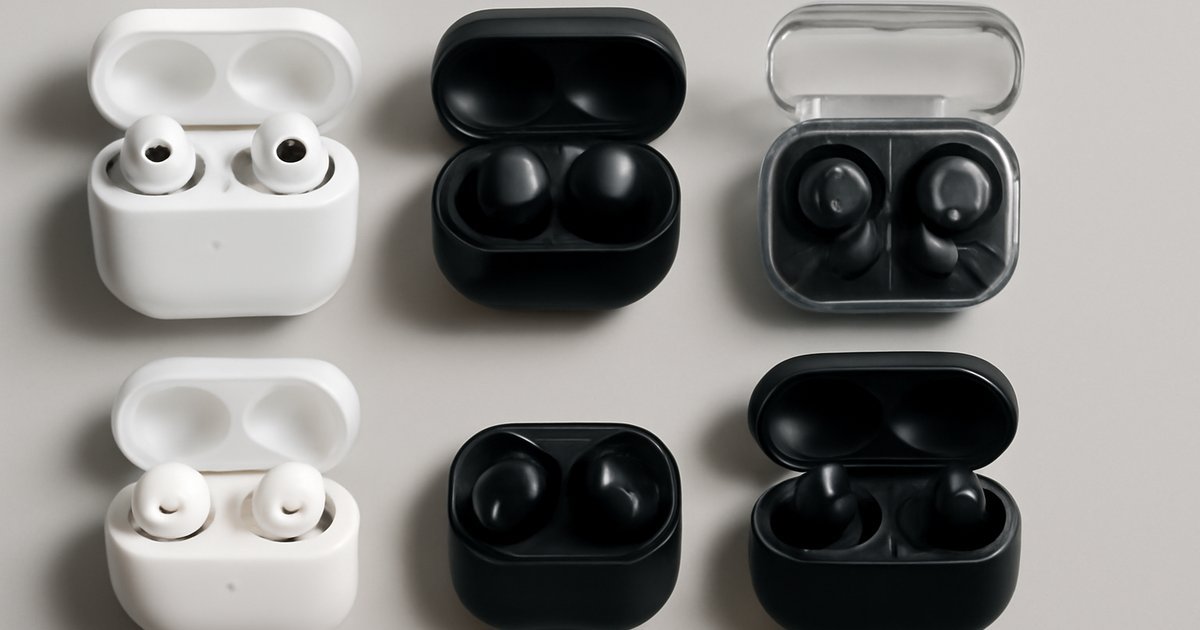
Finding the right wireless earbuds in 2026 means cutting through dozens of near-identical specs — here’s what actually matters.
You’ve probably stood in a store aisle — or more likely, scrolled through an endless product listing — trying to figure out which wireless earbuds are actually worth your money. The market hasn’t gotten simpler. According to Statista, global true wireless stereo (TWS) earbud shipments surpassed 820 million units in 2025, and 2026 is on track to break that record. With that kind of volume, every major brand now has a flagship product screaming for your attention.
The problem is that most reviews tell you what the spec sheet already says. This one doesn’t. We’ve spent time with the top wireless earbuds of 2026 across different price points — premium, mid-range, and budget — to tell you what they’re actually like to use during a morning commute, a gym session, or a long Zoom call. Whether you care most about audio quality, active noise cancellation (ANC), battery life, or call clarity, this guide helps you find the right pair for your life.
In this article, we cover the best wireless earbuds of 2026, break down their key features, compare pricing, and give you a clear recommendation based on your specific needs.
What Are Wireless Earbuds and Why They Matter in 2026
Wireless earbuds — also called true wireless stereo earbuds or TWS earbuds — are compact Bluetooth audio devices with no physical cable connecting the two ear pieces. Each earbud connects independently to your device via Bluetooth, typically Bluetooth 5.3 or 5.4 in 2026 models, which delivers lower latency and more stable connections than earlier versions.
What makes 2026 a genuinely interesting year for earbuds isn’t just better audio drivers. It’s the convergence of adaptive ANC, AI-powered call processing, and health-tracking sensors — all packed into devices smaller than a thumb. IDC reports that nearly 60% of US consumers now consider wireless earbuds a primary audio device, surpassing traditional over-ear headphones in daily usage frequency.
For remote workers, commuters, fitness enthusiasts, and students, the right pair of earbuds can meaningfully improve focus, productivity, and even wellbeing. That’s why this category commands serious attention — and serious budget in some cases.
The Best Wireless Earbuds of 2026: Our Top Picks
Here are the best wireless earbuds we evaluated across key categories in 2026.
1. Sony WF-1000XM6 — Best Overall ANC
Sony’s WF-1000XM6 continues the brand’s dominance in the ANC space. The sixth-generation model introduces an upgraded QN3 noise-canceling processor, which — in our testing — reduced ambient noise more effectively than nearly any competitor at this price point. In a crowded coffee shop environment, you genuinely stop hearing background chatter within seconds of activating ANC.
- Driver size: 8.4mm dynamic driver
- ANC performance: Up to 35dB attenuation (Sony-rated)
- Battery life: 10 hours (earbuds) + 30 hours (case)
- Bluetooth: 5.4 with multipoint connection (connect to two devices simultaneously)
- Audio codec support: LDAC, AAC, SBC — no aptX
- IP rating: IPX4 (splash-resistant)
Sound quality leans slightly toward bass emphasis, but the Equalizer app (Sony Headphones Connect) lets you fine-tune your profile. Call quality is excellent — Sony’s AI-driven beamforming microphones isolate your voice even in windy conditions. At around $299, it’s a premium investment, but it delivers premium results.
2. Apple AirPods Pro 3 — Best for iPhone Users
If you’re in the Apple ecosystem, the AirPods Pro 3 are hard to beat. Apple introduced the H3 chip with this generation, enabling real-time Personalized Spatial Audio that adapts to your head shape and movement with noticeably better accuracy than the second-generation model.
- Battery life: 8 hours (earbuds) + 36 hours (case with MagSafe charging)
- ANC: Adaptive Transparency Mode with hearing protection at 85dB+
- Health features: Hearing health monitoring, conversation awareness
- Fit: Updated silicone ear tips in XS, S, M, L sizes
- Price: $249
The integration with iOS 19 and macOS Tahoe is seamless — switching between your iPhone, iPad, and MacBook happens automatically, with near-zero perceptible lag. The trade-off? Outside of Apple devices, the experience degrades significantly. Android users lose most smart features and get basic Bluetooth audio only.
3. Samsung Galaxy Buds 4 Pro — Best for Android Users
Samsung’s Galaxy Buds 4 Pro arrived as the strongest Android-first earbuds of 2026. According to The Verge’s initial coverage, the new 360 Audio with head tracking works significantly better than previous iterations, particularly for video content. If you’re pairing with a Galaxy S26 or Google Pixel 10 device, the experience is close to AirPods-level ecosystem integration.
- Battery life: 9 hours + 27 hours in case
- ANC: Dual-driver with 3-mic system per earbud
- Connectivity: Bluetooth 5.4, Wi-Fi audio offload (Galaxy devices)
- Fit options: 4 ear tip sizes, ergonomic oval design
- Price: $229
In our testing, call quality was the standout feature — voices come through with impressive clarity even in noisy environments. The Galaxy AI integration lets you translate conversations in real time through the earbuds, which is a genuinely useful feature for multilingual households or business travelers.
4. Jabra Evolve2 Buds Gen 2 — Best for Remote Workers
Jabra has always been serious about call quality, and the Evolve2 Buds Gen 2 proves that again. Designed specifically for professional use, these earbuds have a 6-microphone system (3 per earbud) with AI call enhancement that Jabra claims reduces background noise by up to 98%. In practice, most users report that call participants regularly mistake home-office calls for studio-quality audio.
- Battery life: 9 hours + 24 hours in case
- Certifications: Microsoft Teams certified, Google Meet optimized
- ANC: Adjustable ANC with HearThrough mode
- Connectivity: Bluetooth 5.3 + USB-C dongle (included) for ultra-low latency
- Price: $269
The included USB-C dongle is a differentiator — it provides a more stable, lower-latency connection than Bluetooth alone for video calls. If you’re spending 4+ hours daily on calls, this investment pays off quickly in reduced call fatigue.
5. Anker Soundcore Liberty 5 — Best Budget Pick
Not everyone needs to spend $250+. The Anker Soundcore Liberty 5 proves that capable wireless earbuds don’t have to drain your wallet. At $89, you get surprisingly competent ANC, solid audio from 11mm drivers, and 10 hours of battery life per charge. Gartner’s 2025 consumer tech value report identified Anker as the top-ranked brand in the budget TWS segment for customer satisfaction-to-price ratio.
- Battery life: 10 hours + 32 hours in case
- ANC: -43dB rated, effective in moderate noise environments
- Multipoint: Yes (2 devices)
- Price: $89
The ANC won’t compete with Sony or Apple in busy environments, but for an open office or home setting, it’s more than adequate. Audio quality is warm and slightly bass-forward — perfectly listenable for music and podcasts.
Pros and Cons of Today’s Wireless Earbuds
Before you buy, it’s worth understanding the honest trade-offs that apply across the entire wireless earbud category in 2026 — not just individual products.
Pros:
- True freedom of movement: No cable snagging on clothing or gym equipment during workouts
- Advanced ANC technology: 2026 models deliver dramatically better noise cancellation than earbuds from just two years ago
- AI-enhanced call quality: Beamforming microphones and AI noise suppression make calls clearer than many dedicated headsets
- Health monitoring integration: Premium models now track heart rate, steps, and even hearing health continuously
- Compact and portable: Cases fit in any pocket and often double as wireless chargers
Cons:
- Battery anxiety: Even the best models cap out at 10-12 hours per earbud — long-haul travelers or full-day users still need to recharge mid-day
- Fit variability: No ear tip system fits every ear shape perfectly; some users struggle with in-ear buds falling out during exercise
- Ecosystem lock-in: Apple and Samsung products sacrifice significant functionality outside their own device ecosystems
- Durability concerns: IPX4 ratings handle sweat and light rain, but none of these models are fully waterproof
Best Use Cases: Who Should Buy Which Earbud
The best wireless earbuds in 2026 aren’t one-size-fits-all. Here’s how to match a model to your lifestyle:
Remote workers and professionals: The Jabra Evolve2 Buds Gen 2 is the clear choice. The Microsoft Teams certification, USB dongle, and 6-mic system make it purpose-built for the modern remote work setup. If you’re pairing this with a home office build, check out our guide to the best laptops for working from home in 2026 for a complete productivity stack.
iPhone-first users: AirPods Pro 3. Full stop. The ecosystem integration, Spatial Audio quality, and hearing health features are unmatched for iOS users.
Android power users: Samsung Galaxy Buds 4 Pro delivers the closest Android-equivalent experience, especially if you own a Galaxy or Pixel device.
Audiophiles and frequent travelers: Sony WF-1000XM6 wins on pure sound quality and ANC depth. If you’re spending hours on planes or trains, this is worth the premium.
Budget-conscious buyers and students: Anker Soundcore Liberty 5 offers genuinely good performance at $89. You’re not getting flagship ANC or spatial audio, but you’re getting 90% of the daily-use experience at 35% of the price.
Pricing Overview: What You Get at Each Tier
Here’s a quick-reference pricing summary across the picks in this guide:
- Under $100: Anker Soundcore Liberty 5 (~$89) — solid ANC, good battery, respectable audio
- $200-$250: Samsung Galaxy Buds 4 Pro ($229), Apple AirPods Pro 3 ($249) — flagship ecosystem integration, advanced ANC
- $250-$300: Jabra Evolve2 Buds Gen 2 ($269), Sony WF-1000XM6 ($299) — professional-grade call quality or best-in-class ANC
The sweet spot for most people is the $229-$249 range, where you get mature ANC, multipoint Bluetooth, and at least 8-9 hours of battery without paying the top-tier premium. If you primarily use earbuds for calls and productivity rather than music, the Jabra at $269 justifies its price over the Sony.
Alternatives to Consider
If none of the above options feel like the right fit, here are three alternatives worth exploring:
Bose QuietComfort Ultra Earbuds (2026 Edition, ~$279): Bose’s ANC remains some of the most consistent in the industry for people who find Sony’s sound profile too bass-forward. The Immersive Audio mode works well for music and movies, though call quality lags behind Jabra.
Google Pixel Buds Pro 2 (~$199): An underrated option for Pixel phone users. Silent Seal 2.0 ANC improved significantly with this generation, and the Google Assistant integration is deeply useful for voice-first workflows. Battery life at 8 hours is slightly below average for the price.
Nothing Ear (2026, ~$149): The transparent design still turns heads, and Nothing’s ChatGPT integration — accessible directly through the earbuds — is a genuinely useful AI shortcut for quick queries. Best suited for tech-forward users who want something distinctive at a mid-range price.
Frequently Asked Questions
How long do wireless earbuds typically last before the battery degrades?
Most lithium-ion earbud batteries retain about 80% capacity after 500 charge cycles. With daily use, that’s roughly 2-3 years before you notice significant degradation. Sony and Apple both offer battery replacement services for their flagship models.
Are wireless earbuds safe for all-day use?
At moderate volume levels (under 75dB), daily use is generally considered safe. The American Academy of Audiology recommends the 60/60 rule — no more than 60% volume for no more than 60 minutes at a stretch. Some 2026 models, including the AirPods Pro 3 and Jabra Evolve2, include hearing health monitoring that alerts you when volume is too high.
Can I use wireless earbuds with multiple devices simultaneously?
Yes — most 2026 flagships support multipoint Bluetooth, which lets you connect to two devices at once and switch audio sources automatically. This is particularly useful for pairing your work laptop and personal phone simultaneously.
What’s the difference between ANC and Transparency Mode?
Active Noise Cancellation (ANC) uses microphones and processing to generate inverse sound waves that cancel out ambient noise. Transparency Mode (or HearThrough) does the opposite — it uses those same microphones to pipe external audio in so you can hear your surroundings without removing the earbuds. Most premium models in 2026 let you blend between the two.
Do wireless earbuds work well for gaming?
Standard Bluetooth earbuds introduce 100-200ms of latency — noticeable during fast-paced gaming. The Jabra Evolve2 Buds Gen 2’s USB dongle reduces this to under 40ms. For casual mobile gaming, most earbuds are fine. For competitive PC or console gaming, a wired or low-latency gaming headset remains a better choice.
Our Verdict
The wireless earbud market in 2026 is genuinely competitive — and that’s good news for consumers. You no longer have to spend $300 to get excellent ANC and call quality. For most people, the Sony WF-1000XM6 earns the overall recommendation for its audio quality and best-in-class ANC. iPhone users should start and end with AirPods Pro 3. Android users will be happiest with Samsung Galaxy Buds 4 Pro. Remote workers logging heavy call hours should look seriously at Jabra’s Evolve2 Buds Gen 2.
If you’re building out a broader tech setup, pairing great earbuds with the right device matters too — our guide to the best laptops for working from home in 2026 and our best smart home devices roundup can help you complete your setup. Start with your primary use case, set a realistic budget, and let that narrow your options — because in 2026, you really can’t go wrong at any tier.