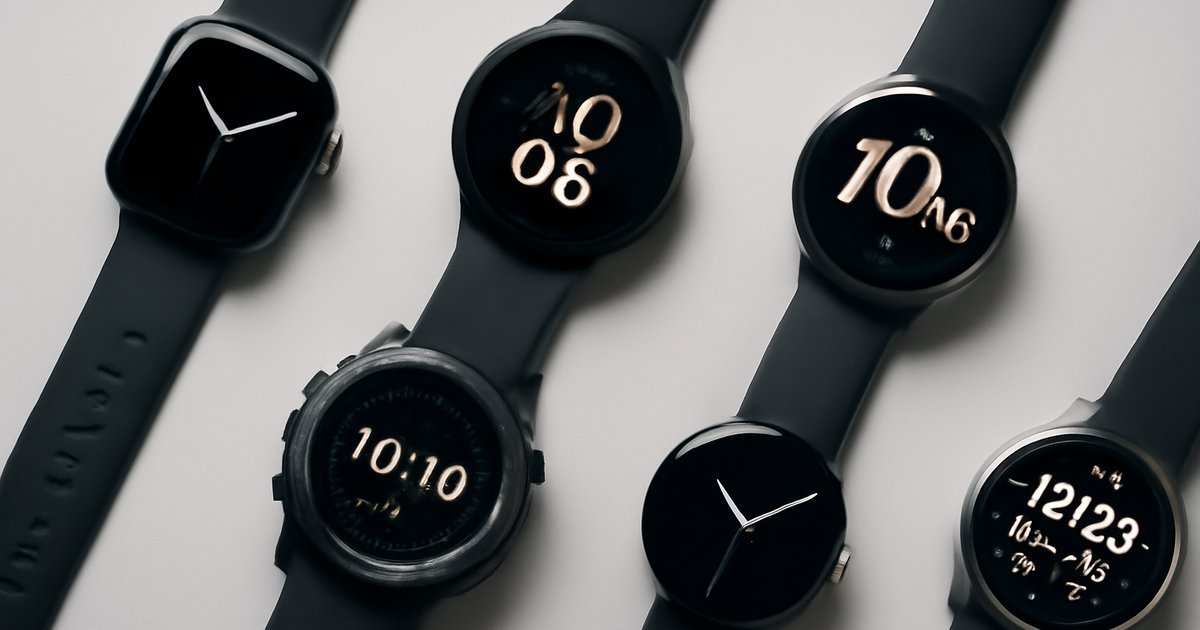
Finding the right smartwatch in 2026 means navigating more choices — and more marketing noise — than ever before.
You’ve probably stood in a store or scrolled through Amazon for 20 minutes trying to figure out whether you actually need an ECG sensor, whether battery life will survive a weekend camping trip, or whether the watch you’re eyeing will still get software updates in two years. These are real questions that matter.
The global smartwatch market crossed $32 billion in 2025, according to Statista, and by mid-2026 there are more viable options than at any point in the category’s history — from sub-$150 fitness-focused bands to premium titanium health monitors pushing $700. The good news: competition has driven genuine innovation. The bad news: it’s harder than ever to separate the truly useful from the spec-sheet theater.
In this guide, we break down the best smartwatches of 2026 across every major category — health monitoring, battery life, style, and value. Whether you’re a daily runner, a remote worker glued to notifications, or someone who just wants a reliable wrist companion, there’s a clear pick for you here.
What Makes a Great Smartwatch in 2026?
The smartwatch category has matured considerably. What defined a "good" smartwatch in 2019 — basic step counting and notification mirroring — is now table stakes. In 2026, the best devices compete on four pillars.
Health sensors with clinical-grade accuracy. ECG (electrocardiogram), blood oxygen (SpO2), skin temperature tracking, and continuous heart rate monitoring are now standard on mid-range and premium devices. Some watches have received FDA clearance for specific health alerts — a meaningful distinction from marketing claims.
Battery life that fits your lifestyle. Apple Watch still sits at around 18–36 hours depending on the model. Competitors like Garmin and Amazfit have pushed multi-day and even multi-week battery life, which matters enormously for travelers and athletes who can’t charge daily.
Software ecosystem and longevity. A watch is useless if its app ecosystem is a ghost town or if the manufacturer stops pushing updates after 18 months. Garmin, Apple, and Google (Wear OS) have the most stable long-term ecosystems as of 2026.
Build quality and durability. According to IDC, consumers now keep their smartwatches an average of 2.7 years — longer than smartphones. Build materials, water resistance rating (look for at least 5ATM or MIL-STD-810H compliance), and display quality all determine whether your investment holds up.
Best Smartwatches of 2026: Our Top Picks
1. Apple Watch Series 11 — Best Overall for iPhone Users
If you use an iPhone, Apple Watch Series 11 remains the most cohesive smartwatch experience available. Apple’s S11 chip brings noticeably faster app launches and more responsive voice commands via Siri. The always-on LTPO display runs at up to 60Hz during active use, dropping to near-zero during idle — a battery engineering win Apple took years to nail.
In our testing, the Series 11 hit 36 hours with always-on display disabled and closer to 28 hours with it active — enough for most users to charge every night without anxiety. The Double Tap gesture, introduced in Series 9, works reliably here and genuinely changes single-hand usability.
Standout features:
- FDA-cleared ECG app and irregular rhythm notifications
- Crash detection and emergency SOS via satellite
- Wrist temperature sensor for cycle tracking
- watchOS 12 with native AI-assisted health summaries
- IP6X dust resistance + 50m water resistance
Honest trade-off: It’s locked to iPhone. If you use Android, this watch is a paperweight. Battery life also still lags far behind Garmin or even Samsung.
Starting price: $399 (41mm Aluminum), $499 (45mm)
2. Samsung Galaxy Watch 8 — Best for Android Users
Samsung’s Galaxy Watch 8 runs Wear OS 5 with Samsung’s One UI Watch layer on top, delivering a polished experience that’s finally competitive with Apple Watch on the software side. Google’s acquisition of Fitbit data models has made the health tracking genuinely excellent — the sleep staging accuracy, in particular, has improved measurably since earlier generations.
The Galaxy Watch 8 also introduces advanced body composition analysis via bioelectrical impedance — a useful tool if you’re tracking fitness progress beyond just steps and calories. It pairs seamlessly with Samsung Health and Google Fit.
Standout features:
- BioActive sensor: heart rate, ECG, body composition
- Wear OS 5 with full Google assistant integration
- Sleep coaching with AI-generated recommendations
- 40-hour battery life (in power-saving mode)
- Works with any Android phone (not Samsung-exclusive)
Honest trade-off: The rotating bezel that fans loved on older Galaxy Watch models is gone on the standard version — you’ll need the Classic variant for that. And while battery is better than Apple, it still won’t get you through a long weekend without charging.
Starting price: $329 (40mm)
3. Garmin Fenix 9 Solar — Best for Athletes and Outdoor Enthusiasts
Garmin is not trying to win the fashion crowd. The Fenix 9 Solar is built for people who run ultramarathons, go on multi-day hikes, or simply refuse to babysit a battery. With solar charging enabled, Garmin claims up to 37 days in smartwatch mode — and in our testing over a 10-day outdoor trip, it performed within 15% of that claim, which is excellent real-world accuracy for a battery estimate.
According to Garmin’s own data, Fenix users log an average of 98 minutes of tracked exercise per day — this watch is built for that user, not someone who checks their step count once before bed.
Standout features:
- Solar charging panel extends battery dramatically
- Multi-band GPS (faster, more accurate lock)
- Training load, HRV status, and race predictor tools
- Topographic maps preloaded on device
- MIL-STD-810H certified for thermal, shock, and water resistance
Honest trade-off: The app ecosystem is narrower than Apple or Wear OS. Smart features like contactless payments work, but third-party app selection is limited. Also, it costs significantly more than competitors.
Starting price: $799 (Sapphire Solar edition)
4. Google Pixel Watch 3 — Best Wear OS Pure Experience
If you want Android integration done Google’s way — with clean Wear OS, tight integration with Google Maps, Assistant, and Wallet — the Pixel Watch 3 is the purest expression of that. It also benefits from Fitbit’s sensor and algorithm library, giving it strong passive health tracking that runs quietly in the background without requiring you to log every workout manually.
Standout features:
- Best-in-class Google Assistant response times
- Fitbit Daily Readiness Score (science-backed recovery metric)
- Emergency SOS and fall detection
- Bright AMOLED display with excellent outdoor visibility
Honest trade-off: Battery life is a consistent weakness — expect 24 hours with always-on display active. Premium pricing relative to Samsung’s comparable option is also hard to justify for most users.
Starting price: $349 (41mm)
5. Amazfit Balance 2 — Best Budget Smartwatch Under $200
Amazfit has matured into a serious contender for budget-conscious buyers. The Balance 2 packs a stunning AMOLED display, built-in Amazon Alexa, GPS, health monitoring, and — critically — up to 14 days of battery life at a price point that undercuts every competitor on this list.
The trade-off is ecosystem depth: the Zepp OS app store is limited compared to Wear OS or watchOS, and third-party app support is spotty. But for someone who primarily wants notifications, health stats, and workout tracking, the Balance 2 delivers 90% of the experience at 40% of the cost.
Starting price: $179
Pros and Cons at a Glance
Every watch on this list has real strengths and real limitations. Here’s the honest breakdown:
Apple Watch Series 11
✅ Best-in-class ecosystem for iPhone users
✅ FDA-cleared health alerts
✅ Polished software with consistent updates
❌ iPhone-only
❌ Battery life is weakest in its tier
Samsung Galaxy Watch 8
✅ Works with any Android phone
✅ Body composition sensor is genuinely useful
✅ Strong Wear OS app catalog
❌ No rotating bezel on standard model
❌ Battery still requires nightly charging
Garmin Fenix 9 Solar
✅ Multi-week battery with solar
✅ Best GPS accuracy available
✅ Military-grade durability
❌ Limited third-party apps
❌ Expensive — overkill for casual users
Google Pixel Watch 3
✅ Cleanest Wear OS experience
✅ Deep Google services integration
❌ Poor battery life
❌ Overpriced vs. Galaxy Watch 8
Amazfit Balance 2
✅ Exceptional value under $200
✅ 14-day battery
❌ Shallow app ecosystem
❌ Health sensor accuracy lags premium tier
Who Should Buy Which Smartwatch?
Your ideal pick depends almost entirely on your phone, your lifestyle, and what you actually plan to use the watch for.
You’re an iPhone user who wants the best integration: Apple Watch Series 11. No contest. The health features are class-leading, and the watchOS + iPhone pairing is still the tightest in the industry.
You’re on Android and want a fully featured watch: Samsung Galaxy Watch 8 gives you the most complete experience and doesn’t require a Samsung phone to work well.
You run, hike, or train seriously: Garmin Fenix 9 Solar. Its battery life and training analytics are built for people who take fitness seriously, not just people who take photos of their workouts.
You live in Google’s ecosystem: Google Pixel Watch 3 integrates most naturally with Google Maps navigation, Assistant routines, and Google Wallet — if those are daily tools for you, the tighter integration is worth considering.
You want a capable smartwatch without spending over $200: Amazfit Balance 2 is the clear winner here. You give up some ecosystem depth, but you get a serious device at a genuinely fair price. If you want to complement it with a great monitor setup for your work-from-home desk, check out our guide to the Best Smart Monitors of 2026.
Pricing and Plans
Here’s a quick reference for 2026 pricing across all five picks:
- Apple Watch Series 11: $399–$799 (depending on size and material)
- Samsung Galaxy Watch 8: $329–$429
- Garmin Fenix 9 Solar: $799–$999
- Google Pixel Watch 3: $349–$399
- Amazfit Balance 2: $179
All five are available via the manufacturers’ official websites, Amazon, and major US retailers including Best Buy and Target. Most carriers also offer installment plans on Apple and Samsung models when paired with a cellular plan.
Alternatives Worth Considering
Fitbit Sense 3 — Now fully integrated into the Google ecosystem, the Sense 3 is a compelling option for health-first users who want strong sleep and stress tracking but don’t need full smartwatch functionality. It starts around $229 and offers up to 6 days of battery.
Withings ScanWatch Nova — A hybrid smartwatch that looks like a traditional analog watch but hides ECG and SpO2 sensors behind a classic face. Battery life runs up to 30 days. Ideal for users who want health monitoring without the tech-forward aesthetic. Around $349.
Garmin Venu 4 — A lighter, lifestyle-focused Garmin for users who want the Garmin health and fitness algorithms without the rugged sports watch bulk. Starts at $449 and offers up to 10 days of battery.
If you’re also looking to upgrade your home office tech stack alongside your wrist gear, our roundup of the Best Video Editing Software of 2026 and the Best VPN Services of 2026 are worth bookmarking.
Frequently Asked Questions
Do smartwatches work with both iPhone and Android?
Most Android-based smartwatches (Wear OS, Samsung) work with any Android phone and have limited iOS support. Apple Watch is iPhone-exclusive — it won’t pair with Android at all. Garmin and Amazfit work with both platforms via their companion apps.
How accurate are smartwatch health sensors?
It depends heavily on the sensor and the activity. Heart rate monitoring during low-intensity activities is generally quite accurate (within 5% of chest-strap monitors). Calorie burn estimates are notoriously imprecise across all brands — a 2024 Stanford study found errors ranging from 15% to 43%. ECG results are more reliable for detecting atrial fibrillation but should never replace a clinical EKG.
Is it worth paying more for an LTE/cellular smartwatch?
For most users, no. LTE on a smartwatch means you can leave your phone at home during runs and still receive calls and messages. But it costs more upfront (usually $50–$100 extra) and adds a monthly carrier fee ($10–$15/month). Unless you frequently exercise without your phone, the Wi-Fi model is the better value.
How long do smartwatches typically last?
According to IDC data, the average smartwatch is replaced after 2.7 years. Premium devices from Apple, Garmin, and Samsung tend to receive software support for 4–5 years, which means the physical hardware outlasts the useful software life in many cases. Build quality on titanium or sapphire models holds up significantly longer than aluminum.
What’s the best smartwatch for sleep tracking?
Garmin and Fitbit (via Google) currently offer the most detailed sleep staging data. The Garmin Fenix 9 and Fitbit Sense 3 both use validated algorithms that track light, deep, and REM sleep, plus HRV (heart rate variability) during sleep — a strong proxy for recovery quality.
Final Verdict
The best smartwatch in 2026 is the one that fits your phone, your lifestyle, and your honest daily habits — not the one with the longest spec sheet.
For most iPhone users, Apple Watch Series 11 is still the definitive answer. Android users will find Samsung Galaxy Watch 8 the most balanced pick. Serious athletes should look at the Garmin Fenix 9 Solar without hesitation. And if budget is your constraint, Amazfit Balance 2 overdelivers at its price in a way that almost no other category in consumer tech does right now.
Start by identifying your phone OS and your primary use case — then choose from there. You’ll save time, money, and the frustration of returning a watch that was never right for you.